

The Feeling of a Well-Made Earring
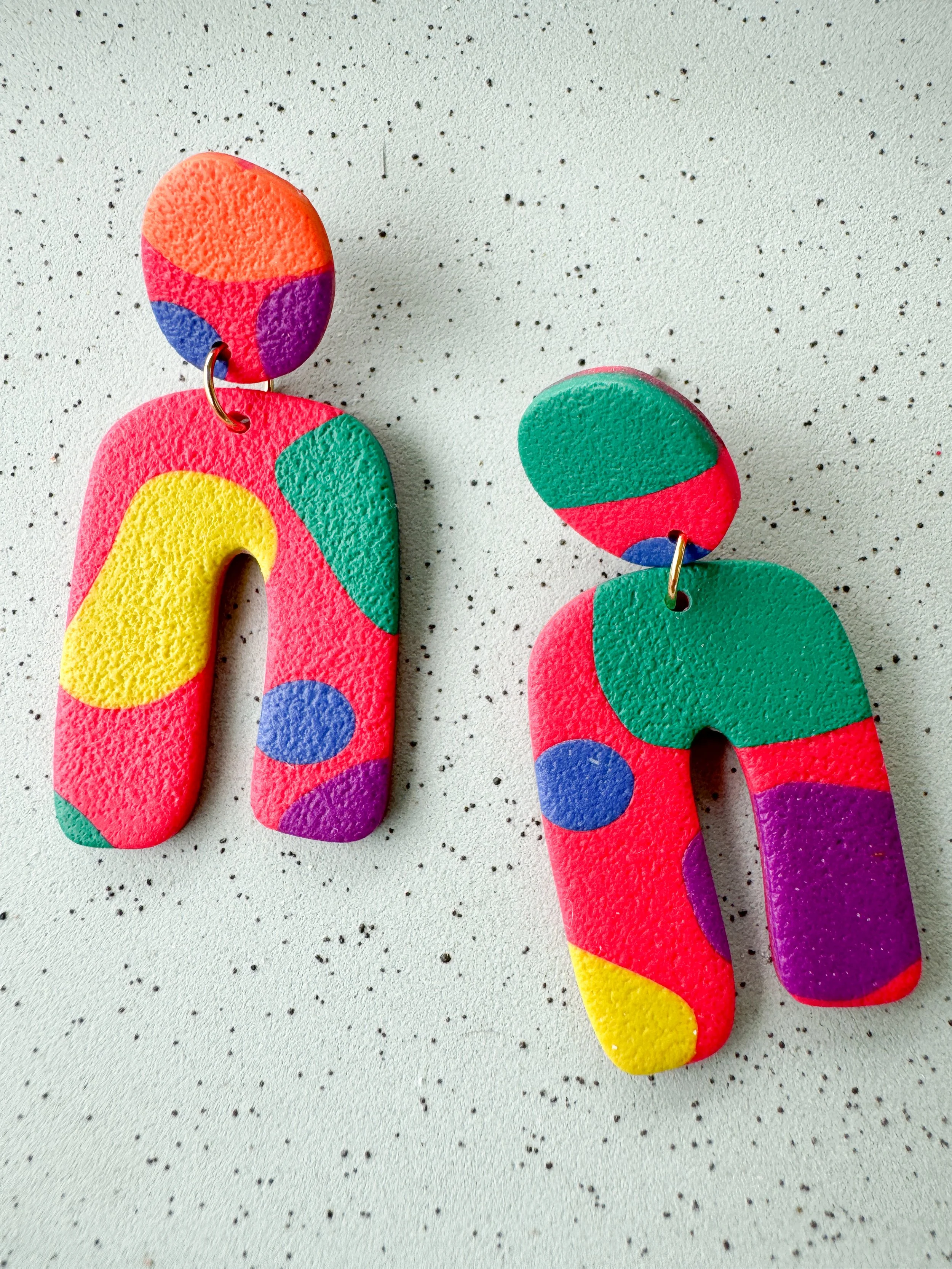
My dad never talked about his paintings as if look and feeling were two different jobs. A painting either worked or it didn't. I make jewelry the same way.
When you grow up with parents who are artists, you can't help but learn things about art.
Not just how to make it, but what makes it good. What makes it beautiful. What works, and what doesn't, even if you can't always explain why.
My dad is a painter, and painters think a lot about balance and perspective. Where the weight of a picture sits. What draws the eye first, and where it goes from there. I didn't grow up thinking of any of that as a lesson. It was just how he talked about his work, at the easel, most days of my childhood.
Turns out, it's just as important when you're making jewelry.
Something can be a little off, a little uneven, and still be beautiful, as long as the balance is right. If it's not balanced, it won't look right. And in the case of an earring, it won't wear right either. It'll feel off. The movement will be wrong.
I think about that almost every time I sit down at my worktable. Because the things that make an earring good to wear are the same things that make it good to look at. They're not separate. A piece that's actually balanced looks right because it's built to feel right, and it feels right because it's built to look right. You just don't always notice which one you're responding to.
Here's what I mean.
Weight Distribution—Two earrings can weigh exactly the same on a scale and still feel completely different on your ear. It all comes down to where that weight actually sits. A design that's heavier at the bottom pulls and swings differently than one where the weight is spread evenly, top to bottom. Get it wrong, and an earring that looked light in the photo feels like your earlobe is dragging on the ground by hour three.
You know the pair. The one where you catch yourself gently massaging your earlobe within an hour of putting them on, like you just ran a marathon you never signed up for.
Center of Gravity—This is really what my dad meant by balance. If the visual weight of a design isn't centered where the earring actually hangs from your ear, it won't hang straight. It'll twist, or tilt, or settle at some odd angle, even if nothing about the piece is technically wrong. This is the invisible thing that decides whether a pair sits the way it's supposed to.
You've seen this one in photos, or lived it yourself, the earring that's decided to face sideways for the entire party, no matter how many times you nudge it back.
Pivot point placement—Where the top stud or connector sits relative to the rest of the design determines how the piece moves when you turn your head, laugh, reach for something. A pivot point in the right spot means the earring moves with you, naturally. In the wrong spot, it swings in a way that feels just slightly off, even if you can't say exactly why.
Ever had an earring slap you in the cheek because you laughed too hard at your own joke? That's a pivot point problem.
Ear wire and post tension—You will never see this in a photo. But it's the difference between an earring that stays put through a whole day and one you're constantly pushing back into place. It's a small, quiet detail, and it's one of the ones I care about most.
This is the earring you find in your car seat, your couch cushion, or somewhere on the bathroom floor, having made a break for it sometime around lunch.
Negative space—The empty space inside a shape does more work than people realize. It's a big part of why my arch design (the one I keep coming back to, again and again) feels light even though it's a bold, statement-sized piece. That open space in the middle keeps it from feeling heavy, visually or otherwise.
Skip this and you get the earring that looks delicate in the photo, then somehow feels like you strapped a small paperweight to each ear.
Scale relative to your face—The exact same shape can look completely different depending on size. A little bigger, and it reads as bold and intentional. A little smaller, and the same design can look flimsy or unfinished. Getting the scale right is its own kind of balance, one that has nothing to do with symmetry at all.
Too big, and you've accidentally become a chandelier. Too small, and nobody at the party can even tell you're wearing earrings at all.
Why it all comes back to comfort
You've probably felt all these before, even if you never had words for it. You know the pair. Maybe you bought it because it was cute in the photo, or a good price. And it's fine, nothing's wrong with it exactly, but by the middle of the day you've caught yourself touching your ear to check if it's still straight. Or you've noticed one side feels heavier than the other, just slightly. That's balance, or the lack of it, showing up as a feeling instead of a word. Your ear knew before your brain caught up.
That's why balance matters, and why I don't separate how a piece looks from how it feels. My dad never talked about his paintings that way, as if look and feeling were two different jobs. A painting either worked or it didn't…because of balance. I make jewelry the same way. When a piece is checking all these boxes, it looks intentional and it feels effortless, at the same time, without me having to choose between them.
That's what my jewelry making is actually about.
Not just making something pretty, but making something you forget you're wearing, in the best way. No pinching, no tugging, no reaching up all day to check if it's crooked. Just a pair that sits right, moves right, and lets you feel like yourself, only a little more confident. That's what "earrings first" means to me, not just choosing a pair based on how you want to feel, but wearing one that actually lets you feel that way, all day, because it was built to.
If it's balanced, it's right. That's the only test that's ever mattered to me, and it's the feeling I want every pair of earrings to give you, whether you notice why or not.